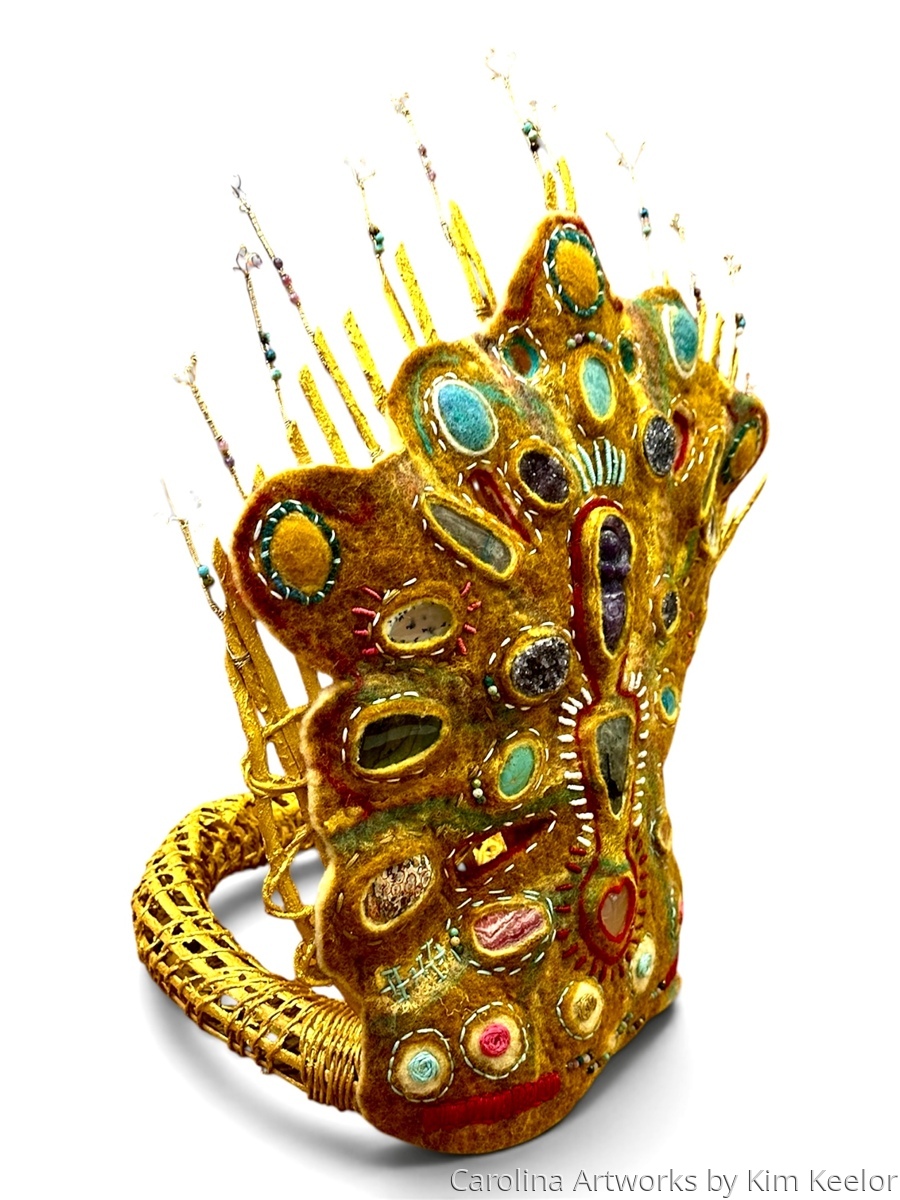
Capital Gem Queens
Franklin, the "Gem Capital of the World," owes much to women. This crown is a homage to them, with gems selected for properties representing strength, wisdom and spiritual grounding.
Gems, basket reeds, wool, upcycled silk, embroidery thread, gold wire, mortar, pigments, twining, wet felt making, jewelry making, embroidery
20 x 18 x 13
Whether indigenous (before and after forced removal), African American (enslaved or free), or white-European settlers, when gold and gems were discovered, women were largely banned from mining. Instead, they crafted and led what sustained families and communities. Women grew and foraged plants (and animals) for textiles, culinary and medicinal needs. They crafted functional and ceremonial baskets and pottery, beadwork and jewelry, and served as linguists, engravers, storytellers, divinatory artists, and spiritual leaders. They worked as cooks and healers at the mines. During World War II, women in mica factories manufactured electrical insulators for military needs. When commercial mining ceased, women helped establish the gem tourist trade which boomed after a 1956 Women’s Day article by a female reporter invited to a Franklin ruby mine, and a similar 1970 article in the New York Times.
Gems, basket reeds, wool, upcycled silk, embroidery thread, gold wire, mortar, pigments, twining, wet felt making, jewelry making, embroidery
20 x 18 x 13
Whether indigenous (before and after forced removal), African American (enslaved or free), or white-European settlers, when gold and gems were discovered, women were largely banned from mining. Instead, they crafted and led what sustained families and communities. Women grew and foraged plants (and animals) for textiles, culinary and medicinal needs. They crafted functional and ceremonial baskets and pottery, beadwork and jewelry, and served as linguists, engravers, storytellers, divinatory artists, and spiritual leaders. They worked as cooks and healers at the mines. During World War II, women in mica factories manufactured electrical insulators for military needs. When commercial mining ceased, women helped establish the gem tourist trade which boomed after a 1956 Women’s Day article by a female reporter invited to a Franklin ruby mine, and a similar 1970 article in the New York Times.